The 3/6 second rule is a safety guideline that helps pedestrians and drivers avoid dangerous collisions on busy roads. This rule refers to the amount of time needed to safely judge distance, react to oncoming vehicles, and make responsible crossing decisions.
When drivers fail to follow safe following distances or pedestrians are not given adequate time or space to cross, serious accidents can occur. You may be entitled to compensation if injured in a pedestrian accident caused by failure to adhere to a safe following distance.
However, you must prove how the actions of the negligent party contributed to the accident and your losses. At the Law Offices of Jason B. Kessler, our pedestrian accident lawyers represent you after the crash.
We can investigate whether a driver violated safe-distance or reaction-time principles or contributed to an unsafe crossing environment. We can also initiate a claim or lawsuit on your behalf against the negligent party.
Pedestrian Accidents and the 3/6 Rule - Key Takeaways
- The 3/6 second rule helps drivers maintain safe following distances and gives pedestrians enough time to cross streets safely.
- Distracted driving, failure to yield, poor visibility, speeding, reckless driving, and impaired driving commonly cause pedestrian accidents.
- Pedestrians can sue if hit by a car due to severe injuries, low settlement offers, disputed liability, uninsured drivers, reckless behavior, bad faith insurer practices, or wrongful death.
- Determining fault relies on evidence such as police reports, eyewitness accounts, traffic camera footage, scene photos, medical records, phone data, and professional analysis.
- Call a pedestrian accident attorney to protect your rights as an injured victim.
What Is the 3/6 Second Rule
The 3/6 second rule is a defensive driving guideline that helps maintain safe following distances between vehicles. Under normal conditions, drivers should maintain a safe following distance of at least three seconds behind the car ahead.
To measure this, watch when the lead vehicle passes a fixed object, such as a sign or pole, and then count how long it takes your vehicle to reach the same point.
The six-second variation applies during adverse conditions such as rain, fog, snow, or heavy traffic. Poor weather reduces visibility and traction, requiring extra stopping distance. Night driving also warrants increased following distance due to limited visibility.
This rule works at any speed because the time interval automatically adjusts for velocity; faster speeds create proportionally larger gaps. Following the 3/6 second rule provides ample reaction time if the vehicle ahead suddenly brakes or swerves.
What Are the Most Common Causes of Pedestrian Accidents?

Pedestrians are at risk of crashes due to the negligence of drivers and other contributing factors. Here are the causes of pedestrian accidents:
Distracted Driving
Driver distraction stands as one of the leading causes of pedestrian accidents. When motorists divert their attention to mobile devices, navigation systems, or other in-vehicle distractions, they fail to notice pedestrians crossing streets or walking along roadways.
A momentary lapse in attention can have devastating consequences, particularly in areas with heavy foot traffic, where a split-second action can cause a serious accident.
Failure to Yield at Crosswalks
Many pedestrian accidents occur when drivers fail to yield the right of way at designated crosswalks and intersections. Despite legal requirements to stop for pedestrians in marked crossing areas, some drivers ignore these rules or misjudge a pedestrian's speed.
Failure to yield increases the risk of collisions for elderly pedestrians or those with mobility challenges who may require additional time to cross.
Poor Visibility Conditions
Inadequate lighting and adverse weather conditions contribute to pedestrian accidents. During nighttime hours, dawn, or dusk, pedestrians become difficult for drivers to see, particularly when wearing dark clothing.
Rain, fog, and snow further reduce visibility, making it challenging for motorists to spot pedestrians until it's too late to stop safely.
Speeding and Reckless Driving
Excessive speed reduces a driver's reaction time and increases the severity of impact when collisions occur. Speeding drivers have less time to respond to unexpected situations in residential areas, school zones, and urban environments.
Reckless driving behaviors, including aggressive lane changes and running red lights, also compound the risk of crashes.
Impaired Driving
Drivers under the influence of alcohol or drugs pose a serious threat to pedestrian safety. Impairment affects judgment, coordination, and reaction time, increasing the risk of collisions with pedestrians.
Evening and nighttime hours carry a high crash risk, as impaired driving and pedestrian activity often increase in entertainment districts and residential areas.
Can a Pedestrian Sue if Hit by a Car?
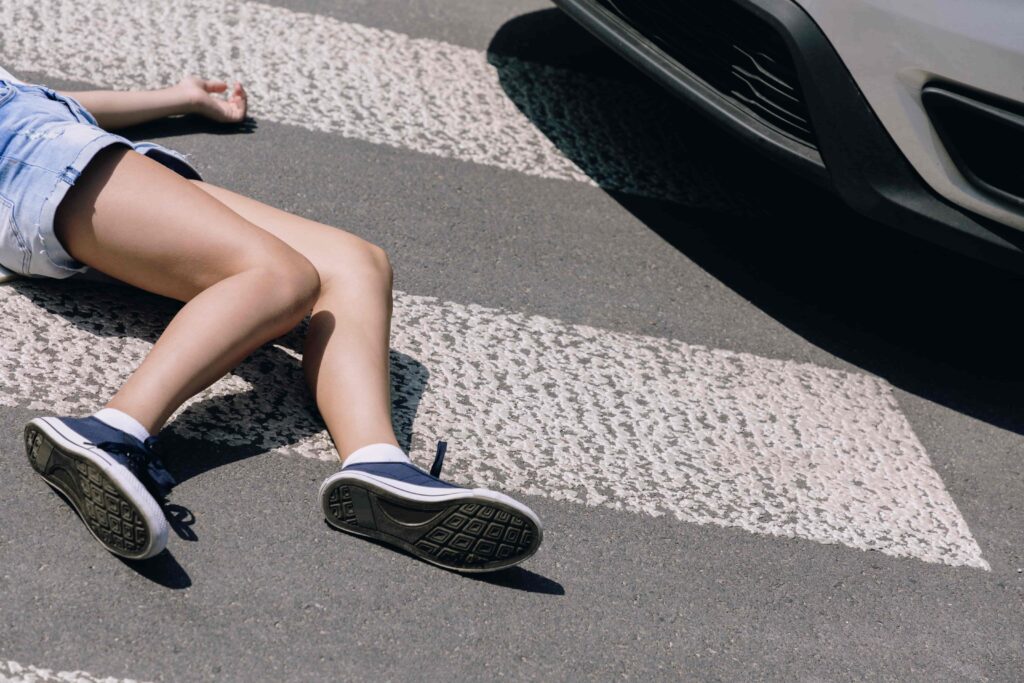
Yes, a pedestrian can sue if injured in a pedestrian accident. While many injured victims obtain compensation from the insurer of the negligent party, some cope without compensation. You can initiate a pedestrian accident lawsuit to protect your right to fair compensation.
Here are a few reasons to sue after a pedestrian accident:
Severe Injury or Permanent Disability
A pedestrian who suffers a serious injury or permanent disability due to being struck by a car may have grounds to file a lawsuit. Severe injuries not only cause immediate pain but can also lead to long-term limitations that affect your daily life and earning potential.
Some injuries that commonly justify legal action include:
- Traumatic brain injury (TBI)
- Spinal cord injury or paralysis
- Severe fractures or broken bones
- Amputation of limbs
- Internal organ damage
- Burns or lacerations requiring extensive treatment
- Chronic pain or permanent mobility issues
A pedestrian accident lawyer can use medical records to demonstrate the extent of these injuries. They can also establish how the accident caused lasting physical or emotional harm, forming a strong basis for a claim.
Low Settlement Offers
Insurance companies may attempt to settle pedestrian claims for less than their actual value. These lowball offers often fail to account for ongoing medical care, reduced earning capacity, and the emotional impact on the family.
A pedestrian accident attorney can use the lawsuit to pursue a settlement value or award that reflects the full impact of the accident.
Disputed Liability
Sometimes, drivers or their insurance companies dispute who was at fault in a pedestrian accident. Disputed liability can delay or prevent victims from receiving compensation. Filing a lawsuit allows a pedestrian to establish liability in court.
A pedestrian accident lawyer can support your compensation claim using eyewitness testimony, traffic camera footage, police reports, and professional accident reconstruction.
Uninsured/Underinsured Driver
You can initiate a lawsuit if the driver who hit a pedestrian is uninsured or underinsured. Lawsuits enable victims to pursue claims against the driver directly or seek coverage through their own insurance policies, such as uninsured/underinsured motorist coverage.
Recklessness
Pedestrians may sue if the driver’s reckless behavior contributed to the accident. Reckless actions include speeding, running red lights, driving under the influence of alcohol or drugs, distracted driving, or ignoring pedestrian right-of-way laws.
A pedestrian accident attorney can use evidence of reckless behavior to strengthen your compensation claim. A judge can award you punitive damages to punish the driver who displayed gross disregard for pedestrian safety.
Bad Faith Insurer Practices
Insurance companies sometimes act in bad faith, denying or delaying claims unfairly. Common bad faith practices include:
- Unreasonable delays in processing claims
- Offering settlements far below the actual value of the claim
- Failing to investigate the accident properly
- Misrepresenting policy coverage or exclusions
- Ignoring or undervaluing medical documentation
- Denying claims without justification
- Pressuring victims to sign releases prematurely
A pedestrian accident lawyer can identify these practices and protect your rights through a lawsuit. A judge can award you punitive damages to punish the insurer and deter similar misconduct.
Wrongful Death
In tragic cases where a pedestrian dies as a result of being hit by a car, surviving family members may file a wrongful death lawsuit. Compensation can cover funeral and burial costs, lost financial support, loss of companionship, and emotional suffering.
Wrongful death claims hold negligent drivers accountable while providing financial support to the victim’s loved ones.
How to Determine Who’s at Fault in an Accident

Determining fault in a pedestrian accident helps injured victims establish liability and secure fair compensation for injuries. Pedestrian accident attorneys rely on multiple sources of evidence to build compelling cases that prove the party that violated traffic laws or acted negligently.
You can prove using the following sources of evidence:
Police Reports
Police reports serve as official records of the accident scene and contain the responding officer's assessment of what occurred at the scene. A pedestrian accident lawyer can use these reports to identify the party the officer believed violated traffic laws.
They can also support your compensation claim using any citations issued and witness statements collected at the scene. The police crash report enhances your weight during negotiations and court proceedings.
Eyewitness Testimony
Independent witnesses who observed the accident provide unbiased accounts of the events. A pedestrian accident attorney can use eyewitness testimony to corroborate their client's version of events.
They can use the statements to establish the driver's behavior before impact, and demonstrate whether the pedestrian had the right of way.
Traffic Camera Footage
Video evidence from traffic cameras, nearby businesses, or dashboard cameras provides objective documentation of the accident. A pedestrian accident lawyer can use the video footage to show the driver's speed, whether they ran a red light or stop sign, failed to yield, or were distracted.
Accident Scene Photographs
A pedestrian accident attorney can use detailed photographs of skid marks, vehicle damage, debris patterns, crosswalk locations, and traffic signals to reconstruct the accident. They can use the images to demonstrate impact angles, vehicle speed, and whether the driver attempted to brake.
Scene photos also document environmental factors, such as poor lighting or obstructed signage that may have contributed to the accident.
Medical Records
You can use medical records to establish the severity of injuries and create a direct link to the accident. A pedestrian accident attorney can use medical records to prove the force of the impact and demonstrate injury patterns consistent with being struck by a vehicle.
Cell Phone Records
Phone records can reveal whether the driver was texting, calling, or using apps at the time of the accident. A pedestrian accident lawyer can subpoena these records to prove distracted driving, which establishes negligence and fault.
Vehicle Data Recorders
Modern vehicles utilize event data recorders to capture data on speed, braking, acceleration, and steering in the moments leading up to an impact. A pedestrian accident lawyer can extract this data to prove excessive speed, failure to brake, or other negligent driving behaviors that contradict the driver's claims.
Expert Witness Analysis
An accident reconstructionist can analyze all available evidence to create detailed recreations of how the accident occurred. A pedestrian accident lawyer can use professional testimony to explain technical evidence to judges and juries and establish the physics of the collision.
Surveillance Footage from Nearby Establishments
Businesses, residences, and public buildings near accident scenes often have security cameras that captured the incident. A pedestrian accident lawyer can secure the footage before it is deleted or overwritten and use it to demonstrate the driver’s negligence and the pedestrian’s actions leading up to the collision.
Pedestrian Accident Frequently Asked Questions
Why Is My Claim Taking So Long?
You may experience delays in your pedestrian accident claim due to liability issues, ongoing medical treatment, or insurance company investigations. Negotiations over settlement amounts or gathering evidence, such as witness statements and accident reports, can also extend the timeline.
How Much Can I Claim for My Injury?
There is no standard compensation for your pedestrian accident injury. The amount can vary based on factors like the severity and long-term impact of your injuries, the strength of available evidence supporting your claim, and the quality of your legal representation.
How Long After an Accident Can You Claim Compensation?
You have a limited time to file a pedestrian accident claim, which must adhere to the statute of limitations. In New York, you generally have three years from the accident date to pursue compensation.
Protect Your Rights After a Pedestrian Accident
Pedestrian accidents can result in substantial financial losses due to medical bills, lost income, and ongoing care expenses. Insurance companies may also attempt to minimize or deny your claim, frustrating your right to fair compensation.
At the Law Offices of Jason B. Kessler, our experienced pedestrian accident attorneys use their knowledge of traffic laws, accident investigations, and negotiation strategies to maximize your recovery. Contact us online or at (914) 220-1088 for a free case evaluation.